
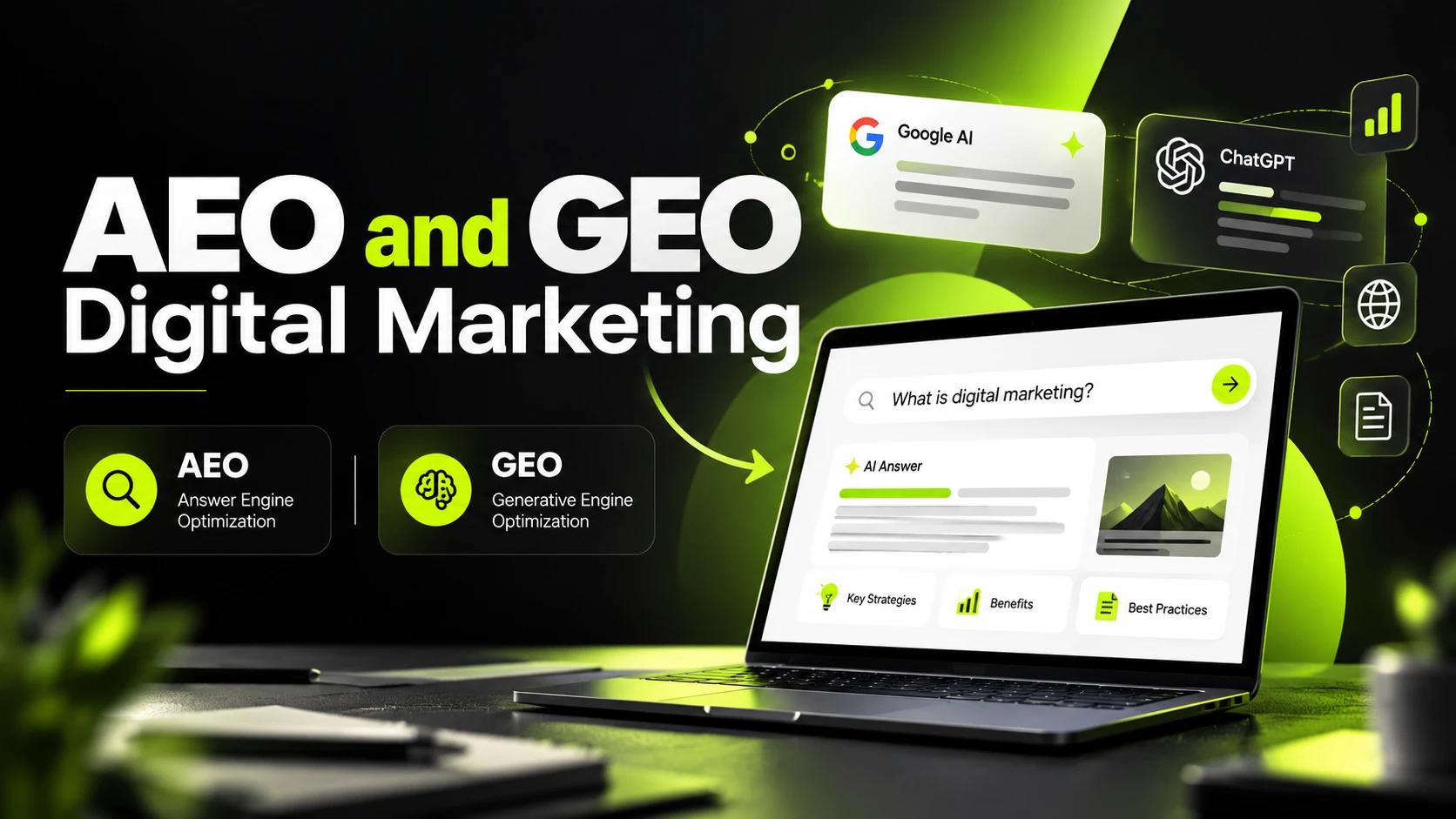
AEO and GEO in Digital Marketing: 7 Powerful Ways to Improve AI Search
About Me
Hi, I’m Aby, a digital marketing professional interested in SEO, graphic design, and video editing. Through my website, abhincashok.com, I explore digital marketing strategies, creative techniques, and emerging technologies that help businesses strengthen their online presence. I believe that continuous learning is essential in an industry where technology and consumer behaviour are constantly changing. One development I find particularly interesting is the growing influence of artificial intelligence on online search. Understanding these changes helps me explore new opportunities in digital marketing and discover how businesses can remain visible in an increasingly competitive digital environment.
Introduction
The way people search for information online is changing rapidly. Traditional search engines remain important, but AI-powered tools are introducing new ways to discover information, compare services, and find recommendations. This transformation has made Answer Engine Optimization (AEO) and Generative Engine Optimization (GEO) important topics for businesses and digital marketers.
Understanding AEO and GEO in digital marketing can help businesses adapt to changing search behaviour and explore new opportunities for online visibility. Although these approaches have different objectives, both focus on making information useful, relevant, and accessible to people searching for answers.
In this article, we will explore what AEO and GEO mean, how they differ from traditional SEO, why they matter, and seven practical ways businesses can prepare for the future of AI-powered search.
Understanding AEO and GEO in digital marketing helps businesses adapt their content strategies to traditional search engines and AI-powered discovery platforms.
1. What Is Answer Engine Optimization (AEO)?
Answer Engine Optimization, commonly known as AEO, is the practice of organizing and improving content so that search systems can understand it and potentially use it to answer users’ questions directly.
Traditional SEO focuses on improving a website’s visibility in search results. AEO places additional emphasis on providing clear answers that may be suitable for featured snippets, voice-search responses, and other answer-focused search experiences.
For example, someone searching for “What is digital marketing?” may want a straightforward definition before exploring the subject in more detail. A website that provides a concise explanation followed by relevant examples can help the reader understand the topic more efficiently.
AEO encourages businesses to understand the questions their audiences ask and provide useful answers in an accessible format.
AEO and GEO in digital marketing can work together when businesses provide clear answers supported by useful, trustworthy information.
How Does AEO Work?
A practical AEO strategy starts with identifying common customer questions. Businesses can then create articles, guides, and FAQ sections that address those questions clearly.
Useful techniques include:
- Using descriptive headings that reflect real questions.
- Providing direct answers near the beginning of relevant sections.
- Explaining technical terms in simple language.
- Organizing content into logical sections.
- Including examples that clarify complicated ideas.
- Supporting important claims with reliable sources.
- Keeping information accurate and up to date.
These practices improve readability and help search systems interpret content. However, they do not guarantee that a search engine will select a particular webpage as an answer.
2. What Is Generative Engine Optimization (GEO)?
Generative Engine Optimization, or GEO, focuses on improving a brand’s potential visibility within AI-generated responses.
Unlike traditional search results, generative search experiences can combine information from multiple sources to produce conversational answers. Depending on the platform and query, those answers may include citations, website links, or recommendations.
Imagine someone asks an AI search tool, “What digital marketing strategies should a small business use to attract more customers?”
The system might generate an answer covering SEO, social media marketing, content creation, email campaigns, and paid advertising. It may also refer users to relevant sources for additional information.
Businesses want their content to be useful and credible enough to be considered as a potential source for these responses.A strong AEO and GEO in digital marketing strategy focuses on making relevant content accessible, understandable, and valuable to users.
How Does GEO Work?
GEO involves strengthening the quality, clarity, credibility, and discoverability of online information.
Businesses can work towards this by:
- Publishing original research and practical insights.
- Demonstrating genuine knowledge of their industry.
- Providing clear explanations and useful examples.
- Maintaining accurate business information.
- Earning relevant mentions from trustworthy sources.
- Making important website content accessible to search systems.
- Updating outdated information.
- Building a consistent and credible online presence.
There is no guaranteed formula for getting cited by AI platforms. Their retrieval systems and selection methods differ, and their behaviour can change over time. GEO should therefore be treated as an evolving optimization practice rather than a shortcut to guaranteed visibility.
3. AEO vs GEO: Understanding the Difference
Although AEO and GEO overlap, they have different areas of emphasis.
AEO focuses on making information suitable for answering specific questions. GEO focuses on improving a brand’s potential visibility when AI systems generate responses using information from different sources.
For example, a digital marketing agency could use AEO by answering “What is local SEO?” directly on its website. It could strengthen its GEO approach by adding original examples, expert observations, relevant statistics, and credible references to the same article.
The same piece of content can support both objectives.
| Feature | AEO | GEO |
|---|---|---|
| Main focus | Direct answers to questions | Visibility in generative AI responses |
| Content approach | Clear, concise explanations | Useful, credible, contextual information |
| Potential discovery channels | Featured snippets and answer-focused experiences | AI-generated answers, references, and citations |
| Useful techniques | Question-based headings and direct answers | Original insights and trustworthy content |
| Relationship with SEO | Builds on SEO fundamentals | Builds on SEO fundamentals |
Neither approach replaces traditional SEO. Technical optimization, relevant content, internal linking, and website accessibility remain important foundations.
4. Why AEO and GEO Matter in Digital Marketing
Search behaviour is evolving as people increasingly use conversational questions and AI-powered tools to discover information. Businesses that understand these changes can develop content strategies that reach audiences through different discovery experiences.
There are several reasons these approaches deserve attention.
Changing Search Behaviour
People increasingly ask complete questions rather than entering only short keyword phrases. For example, instead of searching for “best email marketing tools,” someone might ask, “Which email marketing platform is suitable for a small business with a limited budget?”
Understanding the intent behind these questions helps marketers create more relevant content.
Greater Brand Discovery Opportunities
A business can be discovered through traditional search results, featured snippets, AI-generated answers, and other digital platforms. A relevant mention in an AI response may introduce a brand to potential customers who have not encountered it before.
However, visibility does not automatically lead to clicks, enquiries, or sales. Businesses still need useful landing pages and a good customer experience.Businesses investing in AEO and GEO in digital marketing should prioritize audience needs instead of chasing guaranteed AI rankings.
Stronger Content Strategies
These approaches encourage businesses to create content that demonstrates real expertise rather than simply publishing large quantities of generic information.
Original research, practical tutorials, case studies, and clear explanations can help businesses provide more value to readers.
A Broader Digital Marketing Approach
Modern search optimization connects technical SEO, content strategy, branding, website usability, and analytics. Digital marketers can use these disciplines together to build a more consistent and effective online presence.
5. Seven Practical Ways to Improve Your AI Search Visibility
Businesses do not need to rebuild their websites from scratch. They can begin by improving existing content and strengthening the foundations of their digital presence.
Understand Your Audience’s Questions
Start by identifying the questions customers ask before choosing a product or service. Keyword research tools, search suggestions, customer feedback, and website analytics can help reveal these questions.
Group related questions into meaningful topics and create content that addresses genuine customer needs.
For example, a business providing website development services could publish useful guides explaining website costs, development timelines, essential features, and maintenance requirements.
Provide Clear and Direct Answers
Make the main point of each section easy to understand. When a heading asks a question, answer it near the beginning before providing additional detail.
For example:
What is GEO?
GEO is the practice of improving a brand’s potential visibility in AI-generated responses by creating useful, credible, and discoverable content.
This approach helps readers understand the answer quickly while allowing them to explore the topic further.
Publish Original and Trustworthy Content
Avoid creating articles that simply repeat information available on hundreds of other websites.
Add practical examples, original observations, verified information, and relevant experience. Where appropriate, support claims with reliable references and identify the author clearly.
AI tools can assist with brainstorming, research, and drafting, but human review remains essential for accuracy, context, and originality.
Strengthen Technical SEO
Search systems need to access and understand website content before it can be considered for many search experiences.
Review your website’s crawlability, indexing, internal links, mobile usability, and overall structure. Use descriptive page titles and ensure that important information is available in accessible text.
Follow Google’s official SEO Starter Guide to understand the fundamentals of creating a search-friendly website.
Build a Credible Online Presence
A brand’s credibility extends beyond its own website. Relevant industry publications, genuine customer reviews, professional profiles, and trustworthy third-party references can help people understand a business and its expertise.
Focus on earning recognition through useful work rather than manufacturing mentions or purchasing questionable links.
Optimize Images and Other Media
Images, graphics, and videos can make content more useful and engaging. Use relevant visual assets, descriptive filenames, and meaningful alternative text.
For example, a cover image illustrating this topic could use the alt text “AEO and GEO in digital marketing illustrated with AI search interfaces.”
Visual elements should support the article and help readers understand its subject.
Measure and Improve Performance
Track organic clicks, impressions, rankings, and conversions through tools such as Google Search Console and Google Analytics.
You can also monitor relevant referral traffic from AI platforms, available citation information, brand mentions, and changes in qualified leads.
Not every AI interaction is visible in analytics, so these measurements should be treated as useful indicators rather than a complete picture of AI search visibility.
6. Common Mistakes Businesses Should Avoid
One common mistake is assuming that adding an FAQ section automatically guarantees visibility in AI-generated answers. FAQs can improve usability, but their presence alone does not guarantee rankings or citations.
Another mistake is publishing large volumes of AI-generated content without checking accuracy or adding original value. More content does not necessarily produce better results.
Businesses should also avoid treating AEO and GEO as replacements for traditional SEO. A website with poor technical foundations, confusing navigation, or unhelpful content still needs improvement.
Finally, be cautious of services promising guaranteed AI citations. No legitimate strategy can guarantee that every AI platform will mention a particular business.
A more sustainable approach is to improve content quality, maintain a technically accessible website, and build credibility over time.
7. The Future of AEO and GEO in Digital Marketing
Search technology will continue to evolve, and optimization methods may change as new platforms and features emerge. Businesses should therefore concentrate on principles that remain useful across different search experiences: clear communication, original expertise, accessible websites, trustworthy information, and a strong understanding of customer needs.Applying AEO and GEO in digital marketing involves combining technical SEO, original content, and clear answers to customer questions.
Learning about AEO and GEO in digital marketing can help professionals understand this evolving landscape and make more informed decisions about content and search visibility.
The goal is not to chase every new trend. It is to develop a digital presence that can adapt as technology changes.Learning about AEO and GEO in digital marketing prepares marketers to respond to changing search experiences with a practical, user-focused strategy.
Final Thoughts
AEO and GEO represent two connected approaches to modern search optimization. AEO emphasizes providing clear answers, while GEO considers a brand’s potential visibility within AI-generated responses. Both complement traditional SEO and benefit from useful content, technical accessibility, and trustworthy information.
As someone developing my career across digital marketing, SEO, graphic design, and video editing, I see these developments as an opportunity to keep learning, experiment with new tools, and understand how people interact with technology.
Through abhincashok.com, I aim to explore digital marketing topics and share useful insights as the industry evolves.
Ultimately, successful digital marketing is not simply about ranking higher or appearing in AI responses. It is about understanding people, answering their questions, and providing genuine value. Businesses that focus on these principles will be better prepared to adapt to the changing digital landscape.